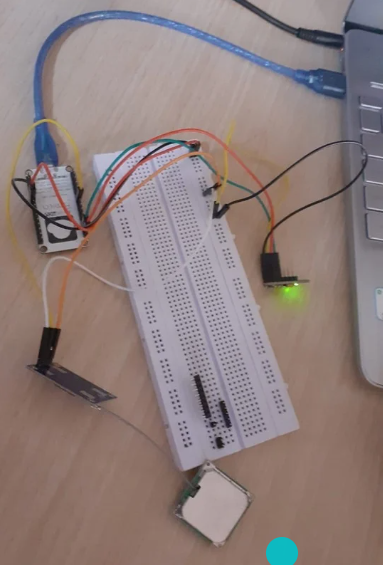
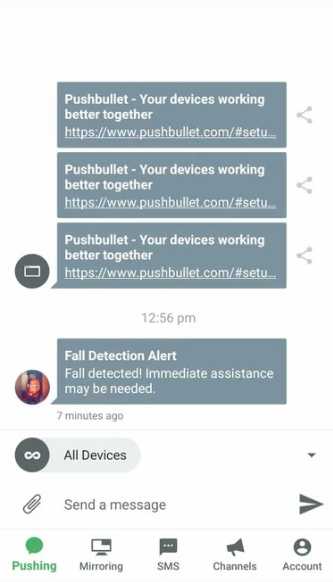
An IoT helmet that detects motorcycle accidents and automatically alerts emergency contacts with the rider's live GPS location. Built on commodity hardware for under ₹6,000, validated with ML classification, and awarded Best Paper at IC-CCDS 2025 (MULTICON-W) — peer-reviewed and published.
Motorcyclists are among the most vulnerable road users, and the minutes after a crash decide outcomes. Helmets prevent injuries — but they don't call for help. When accidents happen in isolated areas, victims can wait critically long for medical attention. The gap: no widespread system automatically detects a rider's accident and alerts emergency services in real time.
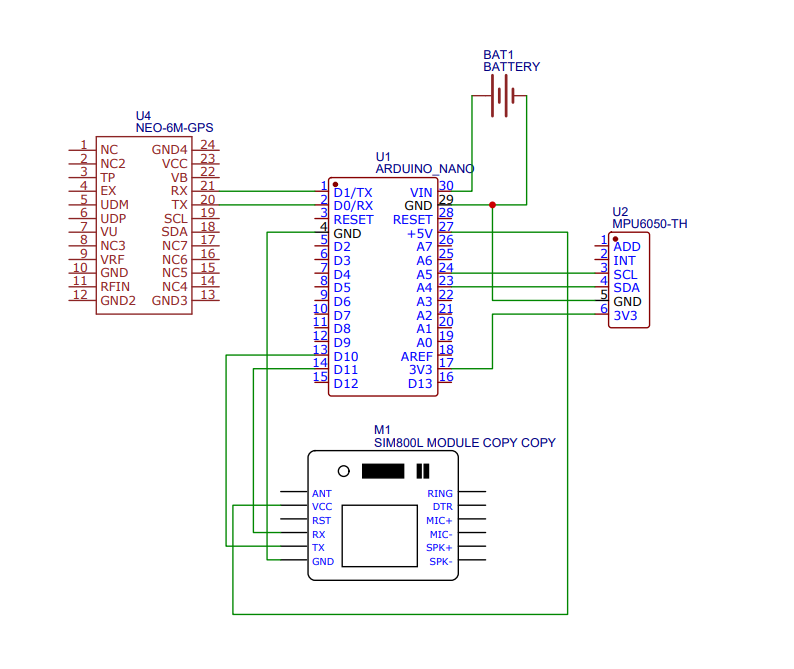
An MPU-6050 accelerometer + gyroscope monitors the rider's motion; a NEO-6M GPS module tracks location; the microcontroller computes acceleration magnitude in real time and, when an impact signature is detected, pushes an emergency alert — with live coordinates — to pre-configured contacts via cloud push notifications, with a SIM800L GSM module as the cellular path. Total bill of materials, including the helmet itself: ₹5,750 (~$70). A life-safety system at commodity cost.
The first detector was a simple physics rule: flag a fall when acceleration magnitude crosses 1.5g. It worked — and it also false-alarmed on abrupt but harmless movements that mimic a fall's signature. Testing surfaced it, the report documented it, and it became the motivation for the published version: sensor-fusion features feeding a neural network classifier, trained on 10,000+ samples, reaching 96%+ accuracy at telling real accidents from rough riding.
Same lesson as every project since: the naive version teaches you what the real version needs to be.
The research — "Smart Helmet for Real-Time Accident Detection and Emergency Alert System" (with Driti Barve and Labdhi Doshi, guided by Mrs. Usha Gupta) — was peer-reviewed and awarded Best Paper at IC-CCDS 2025, part of MULTICON-W 2025, the 16th International & National Conferences and Workshops, for its impact on road safety through AI- and IoT-driven solutions.
Sensors drift, WiFi drops, movements lie. Building for the physical world forces fallbacks — like the GSM path for areas with poor connectivity — that pure-software projects never teach.
₹5,750 total cost isn't a limitation — it's what would make a system like this deployable at scale where it's needed most.