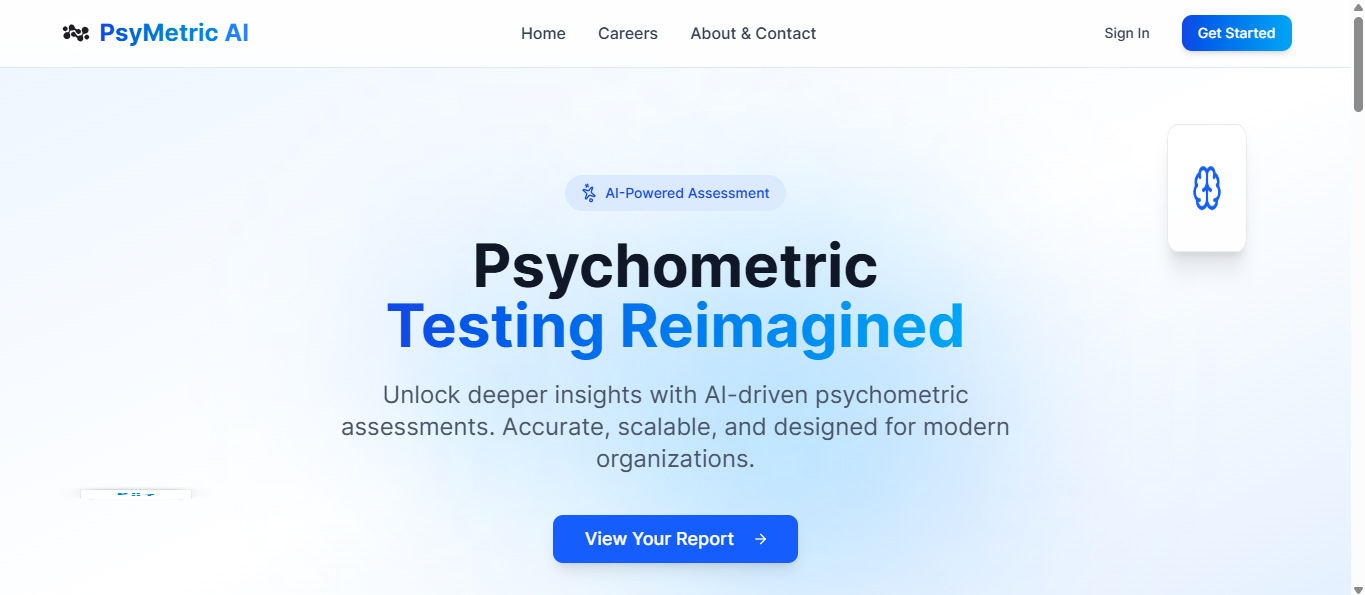
An adaptive career-discovery platform: psychometric assessment powered by Gemini, profiles mapped against 140+ industry career benchmarks, personalized 4-year roadmaps, automated PDF reports — and a working Razorpay paywall. Not a demo; a product people paid to use.
Career guidance for students is usually generic. PsyMetric makes it adaptive: the backend evaluates each response with Gemini (via Vertex AI) and tailors subsequent questions to the user's background — cognitive traits, interest fields, behavioral style — then maps the resulting profile against 140+ career benchmarks to generate matches and a personalized 4-year academic roadmap.
Because it's a product and not a notebook, the unglamorous parts got engineered too: quiz autosave & restore (progress persists in PostgreSQL — close the tab, resume later), one-click restore of previously unlocked reports after retakes, and automated PDF report generation.
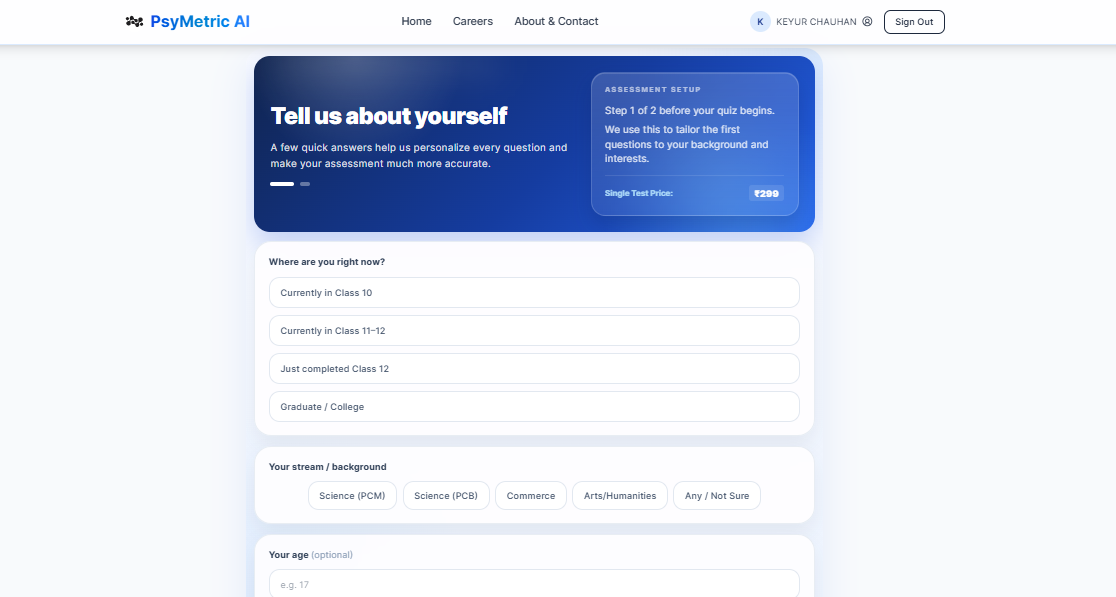
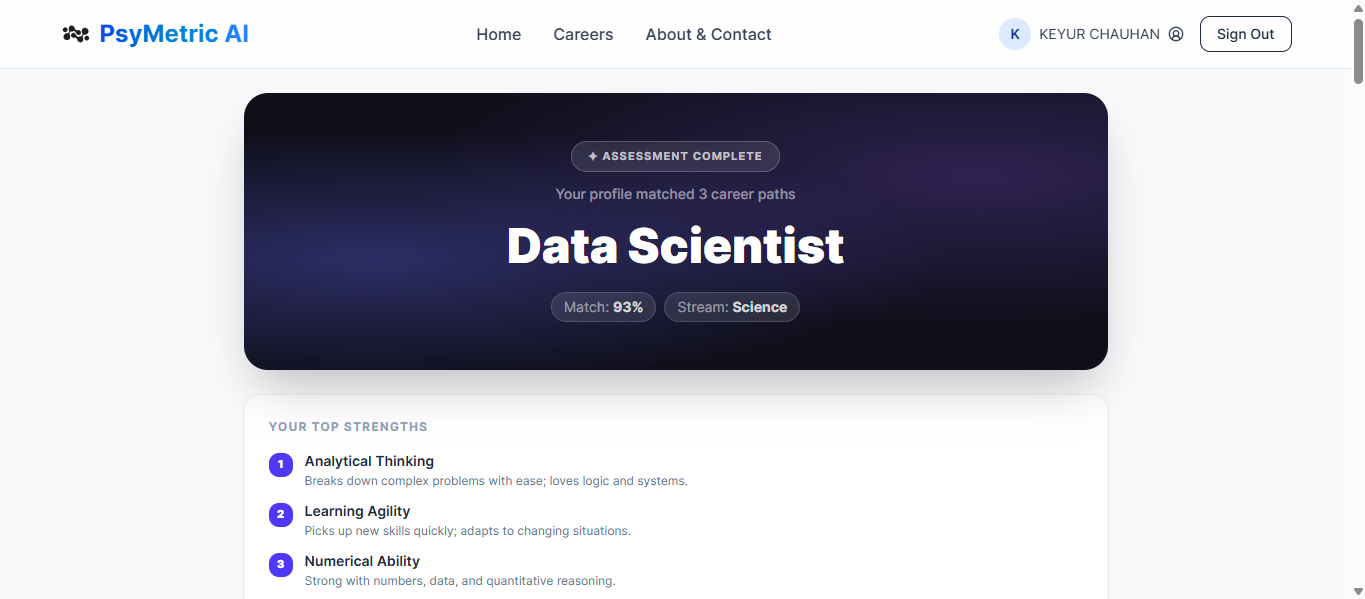
FastAPI backend with 12+ RESTful endpoints holding <200ms response times, scaled to 200+ concurrent users; React + TypeScript SPA frontend; PostgreSQL for sessions, profiles and reports; Gemini integration with inference optimization for real-time personalized mapping. Deployed and operated in production — 50+ profiles processed, 15+ roadmaps generated, 89% satisfaction.
And the part most student projects never touch: payments. Razorpay checkout with a coin-based credit system (₹299 per assessment) gating report access. Integrating a payment gateway means handling real money, real failure modes, and real user trust.
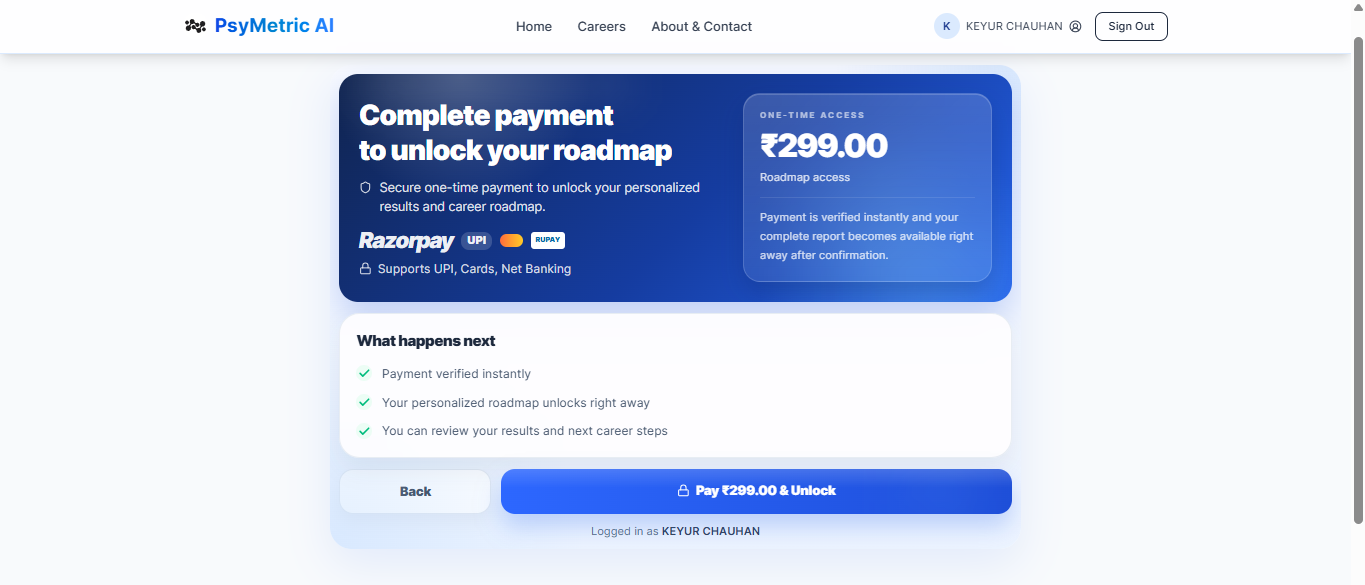
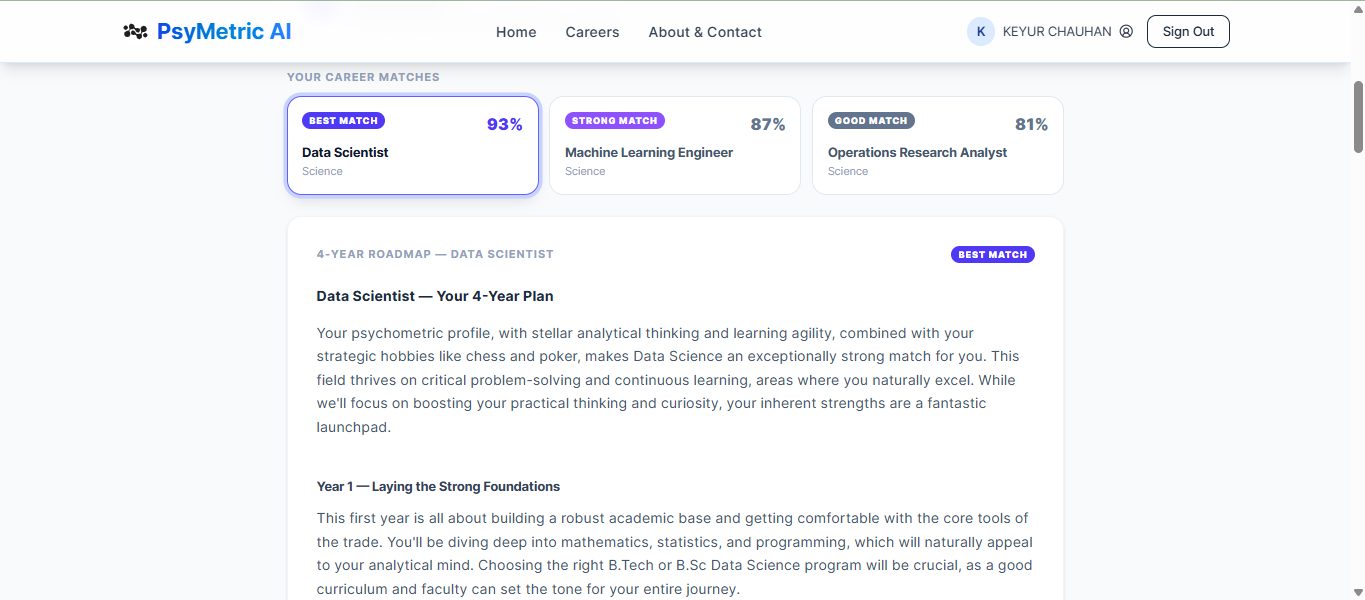
Sessions, payments, autosave, edge cases, angry users — the distance between "the model responds" and "someone pays and gets value" is where the engineering lives.
Adaptive questioning, benchmark mapping, and report generation are structured pipelines around Gemini — the model is one component, not the system.
This project led directly to my current internship building RAG-based assessment pipelines at Suresh Dani Classes — same domain, production scale.